




From GlobalSouthAnglican.org
At the stroke of four, the primates and bishops, led by the Cathedral choir, processed into St Andrew’s Cathedral’s Nave. The 250-strong congregation, comprising Encounter participants, observers and Singaporean church leaders; rose to the processional hymn “Praise my soul, the King of Heaven.
The Fourth Anglican Global South to South Encounter has started.
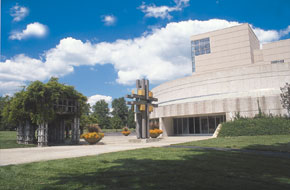
It’s apt that St Andrew’s Cathedral is chosen as the host venue of this Encounter. A weekly average of 4,000 worshippers meet here over 17 Services and 8 language groups. This Cathedral is indeed a light to the nations.
The Encounter’s theme ““The Gospel of Jesus – a covenant for the people, and a light for the nations” was the rallying call of Nigerian Archbishop Peter Akinola’s sermon at the Opening Service.
Abp Akinola noted how the Covenant and the Light of the World was embodied in our Lord Jesus Christ. This role has now been assigned by Him to His body, the church. What does this entail for the church and the Anglican Communion today? He reminded us that the Encounter was a call to action – not just to craft a statement - but to positively impact the world.
As a Covenant, the church has the responsibility to show others how to live according to God’s dictates. This requires her to be absolute, faithful and adherent. As a light, the church is to expose and overcome darkness. In our current situation, how do we go about being a Covenanted people? Abp Akinola acknowledged there are tough questions facing the Anglican Communion but also expressed his hope and expectation that the Encounter might be able to tackle some of these questions by the grace of God.
After the Opening Service, the evening continued after dinner with various words of welcome and first thematic address at the Cathedral New ‘underground’ Sanctuary.
Ecumenical observers shared words of welcome. Elder Fu Xianwei, Chairman of the National Committee of the Three Self Patriotic Movement of China Christian Church, shared on his Church’s desire to learn from the wider Body of Christ. He also indicated hope that the Church in China can contribute in some way to this mutual learning process. The Church worldwide is facing modern and diverse challenges. Even though his Church is founded on the three-self principles, they will still need to be connected to the wider Church.
His Grace Bishop Anba Suriel, the representative of the Coptic Orthodox Church, reminded us that the Covenant of Christ involves the shedding of blood. For some, it means martyrdom or death as we will normally understand that word. It is a price still being paid by some today, as did some Egyptian Coptic Christians last Christmas. However, to be faithful in our witness is also one form of martyrdom. It is costly to remain faithful to the truth and teaching of Scriptures. He said his Church is praying that this Encounter will be a faithful witness in the midst of challenges in the Communion.
We were reminded of the seeds of the Anglican Church growing in various parts of Asia. Pastor Rinzi Lama and Pastor Shyam from the Anglican Church in Nepal shared on the grace of God in helping the Anglican Church in Nepal, though still in her infancy, to grow to 7,000 worshippers today.
The new Primate of Nigeria, Abp Nicholas Okoh gave the first Thematic Address on “The Gospel of Jesus Christ.”
Abp Okoh’s message delved deeply on the problems facing our Communion today, concluding that the vital need for us today is to remain faithful and preach boldly a message of good news centred squarely on our Lord Jesus Christ. Abp Okoh’s message called for the church to remember the key motifs of the Gospel – a pursuit of evangelism, obedience, peace and love, as well as a call to repentance, suffering for the gospel, and ultimately, transformation of our lives and societies. The Encounter is therefore a timely reminder for the church to return to a covenantal relationship with God and to be real light in the world.
Abp John Chew closed the day by sharing on the aims and structure of this Encounter.
With this, the first day of the Encounter ended. Participants retired into the night to rest and be refreshed for the work in the days ahead.
(Featured Photo: Archbishops and bishops outside the Nave before processing in.)


Are there any who are devout lovers of God?
Let them enjoy this beautiful bright festival!
Are there any who are grateful servants?
Let them rejoice and enter into the joy of their Lord!
Are there any weary with fasting?
Let them now receive their wages!
If any have toiled from the first hour, let them receive their due reward;
If any have come after the third hour, let him with gratitude join in the Feast! And he that arrived after the sixth hour, let him not doubt; for he too shall sustain no loss. And if any delayed until the ninth hour, let him not hesitate; but let him come too. And he who arrived only at the eleventh hour, let him not be afraid by reason of his delay. For the Lord is gracious and receives the last even as the first.
He gives rest to him that comes at the eleventh hour, as well as to him that toiled from the first. To this one He gives, and upon another He bestows. He accepts the works as He greets the endeavor. The deed He honors and the intention He commends. Let us all enter into the joy of the Lord!
First and last alike receive your reward; rich and poor, rejoice together! Sober and slothful, celebrate the day! You that have kept the fast, and you that have not, rejoice today for the Table is richly laden! Feast royally on it, the calf is a fatted one. Let no one go away hungry. Partake, all, of the cup of faith. Enjoy all the riches of His goodness! Let no one grieve at his poverty, for the universal kingdom has been revealed. Let no one mourn that he has fallen again and again; for forgiveness has risen from the grave. Let no one fear death, for the Death of our Savior has set us free. He has destroyed it by enduring it. He destroyed Hell when He descended into it. He put it into an uproar even as it tasted of His flesh.
Isaiah foretold this when he said, "You, O Hell, have been troubled by encountering Him below." Hell was in an uproar because it was done away with. It was in an uproar because it is mocked. It was in an uproar, for it is destroyed. It is in an uproar, for it is annihilated. It is in an uproar, for it is now made captive.
Hell took a body, and discovered God.
It took earth, and encountered Heaven.
It took what it saw, and was overcome by what it did not see.
O death, where is thy sting?
O Hell, where is thy victory?
Christ is Risen, and you, o death, are annihilated!
Christ is Risen, and the evil ones are cast down!
Christ is Risen, and the angels rejoice!
Christ is Risen, and life is liberated!
Christ is Risen, and the tomb is emptied of its dead;
for Christ having risen from the dead,
is become the first-fruits of those who have fallen asleep.
To Him be Glory and Power forever and ever. Amen!
The Easter sermon of John Chrysostom (circa 400 AD)


 note: This pastoral was written and posted a year ago. It seems appropriate to post it again.
It Isn't Easy Being Anglican
At the heart of the various difficulties in embracing the Anglican world is the brokenness of Anglicanism itself. While this church is as historic as any, more prolific than most and wonderfully rich in its liturgy, it is today a broken church. Once merely the church of the British Isles, the empire took this way of faith around the world. The Anglican way grew to be a large body of Christians second only to Rome and Orthodoxy.
Even today, Christians of the Anglican faith are on the front lines geographically in the global south. Every day, Anglicans spread the Gospel, form parishes, teach the faith, and make converts of unbelievers. In a few short years, the number of Anglican Christians in Nigeria, the Sudan, Congo, Indonesia and many other places have swelled to be counted in the tens of millions. It may be said with integrity that Anglicans are taking a back seat to no other Christian tradition in spreading the faith of Jesus Christ in the 2/3 world. In Latin America, where Anglican Christians had little more than a few scattered chapels just a decade ago, the church is vibrant, robust and growing by leaps and bounds.
Meanwhile, these same vibrant Christians have witnessed the scandal of what passes as Anglican Christianity in the “material west”.
With deep respect I say, Rome has not captured my heart, nor has Orthodoxy taken hold of my soul. But it would be unfair to characterize my own choice as merely one of default, that is, having examined both of the other sisters of apostolic faith and having found myself identifying with the Anglican way solely because I would not or could not choose one of them. I am not Anglican merely because I found myself having to “settle” for some supposed lesser thing.
No, I am orthodox, catholic, but Anglican.
Rome and, to a much lesser degree, Orthodoxy are more magisterial, more hierarchal and appear better equipped to make things “tidy”. The Anglican way is no place for those who cannot live within tensions. It is an impossibly challenging and difficult place for those who desire or need “tidy”. The Anglican way is freer, but it is messy. It just is what it is. Some say that is both the magic and the limp of the Anglican way.
Yet, where would the Christian faith be without her? There would have been no King James Bible, no Book of Common Prayer, and while I won’t flesh out my complete thoughts here, no civilization as we know it in the west. This is my opinion, I grant you, but the Anglican contribution to the western world simply cannot be measured.
The best I can likely do in this broken family, this Anglican Church, is to find a place of honesty and integrity. First, I must recognize how messed up this group is, and this I honestly confess. Secondly, whenever I hear of the difficulties that Romans have or the Orthodox have (or the troubles among the free church Evangelicals, for that matter) nothing in me sees the need to gloat. Humility should always forbid it, but for Anglicans, this is a particularly humbling era.
I choose to walk in the Anglican way because I honestly believe the Lord has led me to walk in this way. I believe He ordered my steps. I know. I know there is a risk in making such a statement. It may appear that I “fix blame” for my love for the Prayer Book on the Lord and dodge my own responsibilities in the matter of my Christian witness.
Yet, I testify that my prayer life finds its home in the Prayer Book the way the swallow finds her home near the altar in Jerusalem. I am Anglican.
There is work to do wherever one finds oneself planted by the Lord in His vineyard. There is pruning to do, weeds to pull, walls to rebuild, marauders to defend against, plants to husband, fruit to grow and a harvest to bring in. Perhaps some vineyards are harder to work than others, this I grant you, but none are the Paradise of God, not yet. This is the cry we hear, even now, emanating from the Eschaton.
Sola Gratia,
+Frederick G. Fick MSJ
February 18. 2009


Dear People of God:
The first Christians observed with great
devotion the days of our Lord's passion and resurrection, and
it became the custom of the Church to prepare for them by a season of penitence and fasting. This season of Lent provided
a time in which converts to the faith were prepared for Holy
Baptism. It was also a time when those who, because of
notorious sins, had been separated from the body of the faithful
were reconciled by penitence and forgiveness, and restored to
the fellowship of the Church. Thereby, the whole congregation
was put in mind of the message of pardon and absolution set
forth in the Gospel of our Savior, and of the need which all
Christians continually have to renew their repentance and faith.
I invite you, therefore, in the name of the Church, to the
observance of a holy Lent, by self-examination and repentance;
by prayer, fasting, and self-denial; and by reading and
meditating on God's holy Word.


A Collect for Peace
O God, who art the author of peace and lover of concord, in


